
AI & Data Science Lab
Astronomy has entered the era of Big Data with the advent of next-generation ground- and space-based facilities capable of performing multi-wavelength, all-sky surveys, from gamma rays to the radio domain. In this context, Artificial Intelligence (AI) has become a key enabling technology, allowing the efficient analysis and interpretation of vast and complex datasets that are increasingly difficult to handle with traditional methods. Machine learning (ML), deep learning (DL), and more recent paradigms such as generative AI provide powerful tools to accelerate scientific discovery, uncover hidden patterns, and extract meaningful information from observations, simulations, and data-intensive pipelines.
These challenges are not unique to astrophysics. Similar needs arise in industrial contexts, where AI techniques are used for advanced automation, predictive maintenance, process optimization, and design generation. This convergence highlights the strategic role of AI as a bridge between fundamental research and technological innovation, fostering opportunities for interdisciplinary collaboration and knowledge transfer.
The INAF USC-C “AI in Astronomy” Thematic Group
Within INAF, the importance of AI has grown significantly in parallel with the Institute’s involvement in major international projects such as SKA and its precursors, CTA, Euclid, Vera Rubin Observatory, ELT, and Gaia. These initiatives require advanced data analysis capabilities and the development of scalable, robust, and reproducible AI-driven methodologies. Strengthening AI expertise within the INAF community is therefore essential to fully exploit the scientific potential of these projects and to reinforce INAF’s role in international collaborations.
In response to a strong and widespread interest emerging across INAF sites, the “AI in Astronomy” thematic group (https://usc8.inaf.it/tematic-groups/ai-in-astronomy/) was established within the Central Scientific Unit for Computing (USC-C). The group was formally initiated following a kickoff round table held on July 12, 2024, during the ML4ASTRO2 conference, where researchers discussed its scope and objectives.
The primary goal of the thematic group is to foster collaboration, knowledge sharing, and the dissemination of best practices among researchers applying—or intending to apply—ML and DL techniques in astrophysics. The group provides a collaborative environment to address the full AI workflow, from data preparation and preprocessing to model development, validation, optimization, and deployment. It also promotes synergies across different astrophysical domains, where common methodological approaches can act as unifying elements.
More broadly, the group aims to:
- encourage collaborative development of software tools and datasets;
- explore emerging AI technologies and methodologies;
- support joint scientific publications;
- organize workshops, schools, and conferences for training and knowledge exchange;
- build a critical mass for competitive national and European funding proposals;
- contribute to discussions on career development and recruitment of AI specialists within INAF.
CONTACTS
Everyone interested, including those who are not experts in the field, is more than welcome to join the group, either as participants or as organizers of initiatives and events.
To join the group or for further information, please contact us at the following mail address: usc8-ai_AT_inaf.it
These additional mailing lists for Working Groups (WGs) are also available:
- Group coordinators: usc8-ai-mgt_AT_inaf.it
- WG Projects: usc8-ai-projects_AT_inaf.it
- WG Training: usc8-ai-training_AT_inaf.it
- WG Outreach: usc8-ai-outreach_AT_inaf.it
INAF USC-AI GROUP MEMBERS @ OACT:
LIRA aims to coordinate and strengthen AI-related activities at OACT, acting as a hub for both astrophysical research and industrial collaboration. The laboratory formalizes and consolidates ongoing efforts carried out by a team of researchers and technologists who have been actively developing and deploying AI applications in astrophysics for several years, within large international projects and national HPC/AI initiatives.
The laboratory provides an integrated framework that combines:
- scientific expertise in AI applied to astrophysical problems (e.g., source detection and classification, transient identification, anomaly detection, simulation and synthetic data generation);
- technological know-how in scalable AI solutions;
- access to dedicated computing resources optimized for testing AI and HPC workloads.
At the same time, LIRA is designed to serve as an interface with industry, supporting the development and integration of AI solutions for real-world applications, including process optimization, predictive maintenance, and advanced design. This dual role enables effective technology transfer and co-design of innovative solutions, particularly with companies operating in strategic sectors.
From a strategic perspective, LIRA contributes to:
- enhancing AI-driven research within INAF, especially in Big Data–intensive projects;
- supporting training and capacity building for researchers and technical staff;
- enabling access to AI-oriented computing infrastructures;
- fostering collaborations with industry and public research institutions;
- attracting high-impact national and European projects.
By combining scientific research, technological development, and industrial collaboration, LIRA represents a key infrastructure for managing and advancing AI activities at OACT, positioning the Observatory as a leading reference center for AI applications within INAF and across the Italian scientific landscape.
Simone Riggi
SCIENTIFIC COLLABORATIONS
Cristobal Bordiu, Instituto de Astrofísica de Andalucía (IAA-CSIC)
Andrea De Marco, Università di Malta (UoM)
Andrea Pilzer, NVIDIA AI Technology Center, Italia
Concetto Spampinato, DIEEI, Università di Catania, Italia
Simone Palazzo, DIEEI, Università di Catania, Italia
INDUSTRIAL COLLABORATIONS
| Project | Partner | Description | Period |
|---|---|---|---|
| AstroView | Intellisync S.r.l. Free Mind Foundry, Via Sclafani, 40 B, 95024 Acireale CT | The project, developed within the “Bando a Cascata” initiative of the National Centre for HPC, Big Data and Quantum Computing (Spoke 3 – Astrophysics & Cosmos Observations), focused on the development of software tools and web dashboards for the interactive visualization and semi-automatic annotation of large astrophysical image datasets, leveraging features and representations extracted through Artificial Intelligence models. The platform integrates dataset import/export and visualization functionalities (PixPlot-based), advanced interactive labeling tools, and Machine Learning services for classification, anomaly detection, clustering, and similarity search. | 2024-2025 |
STUDENTS
| Name | PhD | University | Thesis | Supervisors |
|---|---|---|---|---|
| Thomas Cecconello | Electrical, Electronic and Computer Engineering XXXVIII Cycle 2022-2025 | University of Catania | Towards Scalable Scientific Discovery: AI Paradigms for Next-Generation Radio Surveys | Simone Palazzo (DIEEI-UNICT) Simone Riggi (INAF-OACT) |
| Daniel Magro | Physics 2019-2024 | University of Malta | Deep Learning applied to big astronomical data from SKA and its precursors | Andrea De Marco (UoM) Simone Riggi (INAF-OACT) |
| Renato Sortino | Electrical, Electronic and Computer Engineering XXXVI Cycle 2020-2023 | University of Catania | Controllable generative models for human-guided data synthesis and applications in radio astronomy | Concetto Spampinato (DIEEI-UNICT) Eva Sciacca (INAF-OACT) |
PROJECTS & ACTIVITIES
| Acronym | Title | Logo | Description | PI | Period |
|---|---|---|---|---|---|
| MAASAI | Multi-Agent AI System for Astrodata Insights |  | Development of multi-agent AI assistant systems for astrophysical data analysis across multiple domains (radio, solar, exoplanets, etc) leveraging LLM and foundational models. | Simone Riggi | 2026-ongoing |
| SFFORECASTER | Solar flare forecasting with multi-modal data | 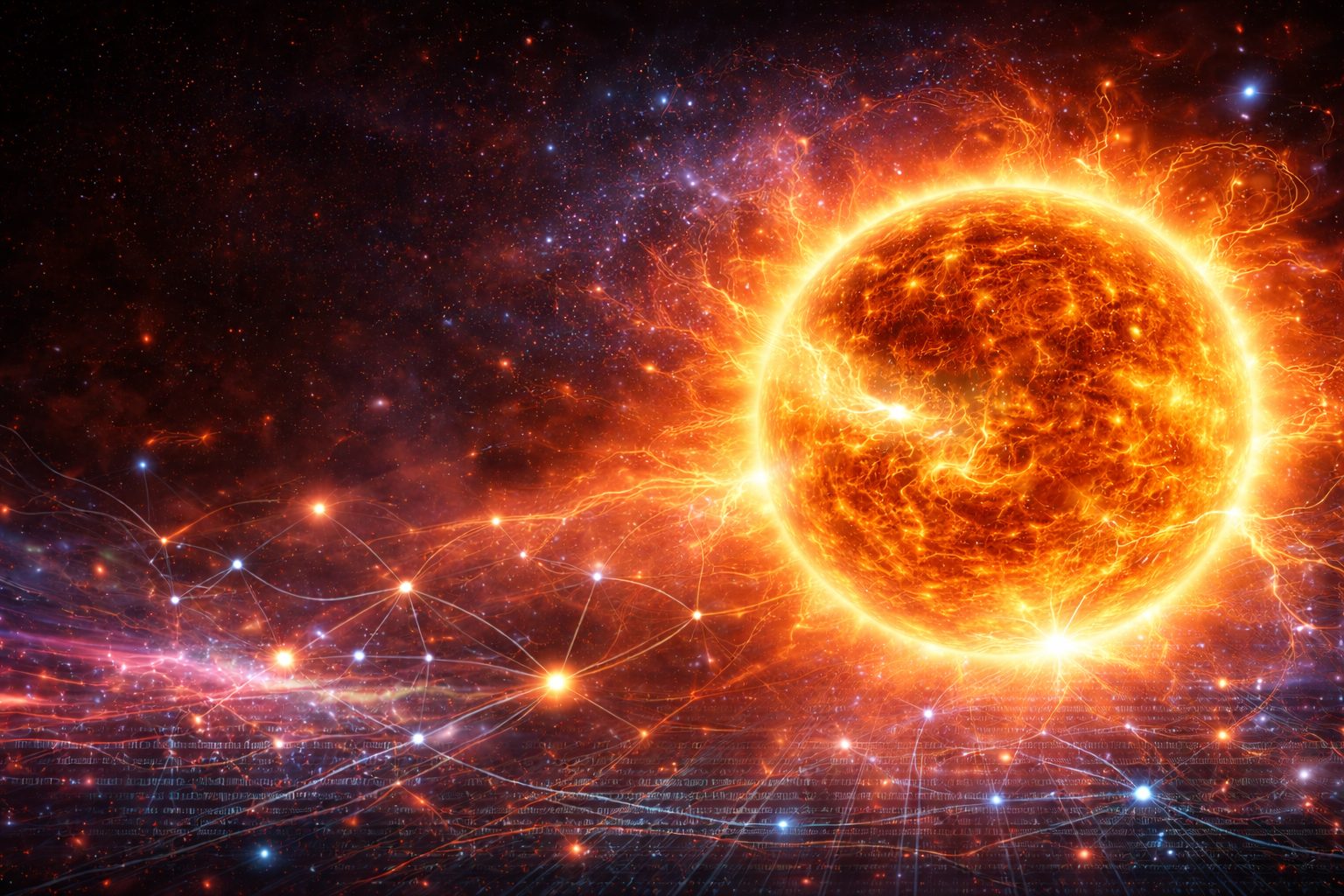 | Development of solar flare forecasting tools with transformer architectures & foundational models for different data modalities: images, videos, time series. | Simone Riggi | 2025-ongoing |
| STRADA | Self-supervised Transformers for Radio Astronomy Discovery Algorithms | Development of radio foundation models with transformer architectures, self-supervised learning, and massive radio data collections. | Andrea De Marco Simone Riggi (co-PI) | 2024-2026 |
|
| SCIARADA | Self-supervised Contrastive learning for Inspection and Analysis of RAdio DAta in the SKA era |  | Development of self-supervised contrastive learning methods for radio source detection, classification and anomaly detection using SKA precursor data. | Simone Riggi | 2024-2026 |
| CN HPC | Italian Research Center on HPC, Big Data and Quantum Computing, Spoke 3 |  | Development & parallelization of software tools for radio source detection & classification using SKA precursor data. | Project Ugo Becciani Activity Simone Riggi | 2022-2025 |
| CIRASA | Collaborative and Integrated platform for Radio Astronomical Source Analysis |  | Development of software services based on deep learning for radio source detection & classification using SKA precursor data. Integration with ViaLactea Visual Analytic (VLVA) desktop application. | Simone Riggi | 2023-2025 |
| MOSAICO | Metodologie Open Source per l’Automazione Industriale e delle procedure di CalcOlo in astrofisica | 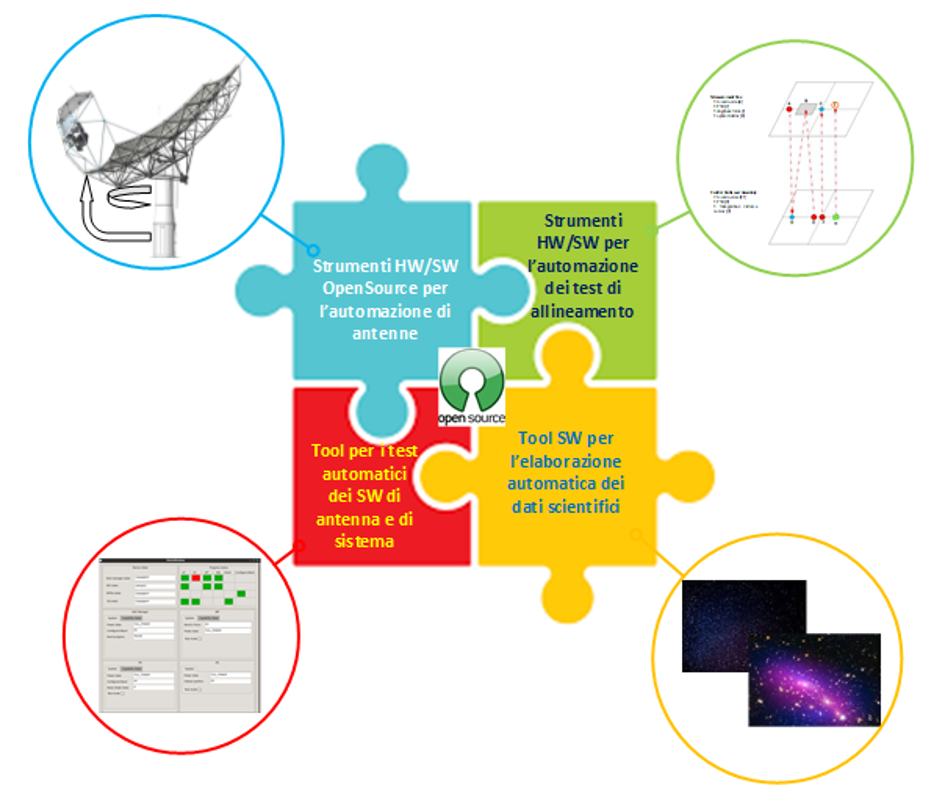 | Design of algorithm & open source tools to extract features from astrophysical data. | Project Francesco Schillirò Activity Simone Riggi | 2020-2022 |
EVENTS & TRAINING
| Event | Edition | Date | Venue | Website |
|---|---|---|---|---|
| Machine Learning for Astrophysics (ML4ASTRO) conference | 3rd | 31 Ago - 4 Set 2026 | La Valletta, Malta | https://indico.ict.inaf.it/event/3460/ |
| INAF USC-C “AI in Astronomy” workshop & AI Training school | 2nd | 14-17 Apr 2026 | Napoli | https://indico.ict.inaf.it/event/3429/ |
| INAF USC-C “AI in Astronomy” workshop & AI Training school | 1st | 21-23 Mag 2025 | Catania | https://indico.ict.inaf.it/event/3128/ |
| Machine Learning for Astrophysics (ML4ASTRO) conference | 2nd | 8-12 Lug 2024 | Catania | https://indico.ict.inaf.it/event/2690/ |
| Centre of Excellence in Radio Astronomy and Machine Learning (CERAML) workshop | 1st | 25-27 Mar 2024 | La Valletta, Malta | https://tinyurl.com/5ryyctsh |
| Machine Learning for Astrophysics (ML4ASTRO) conference | 1st | 30 Mag - 1 Giu 2022 | Catania | https://indico.ict.inaf.it/event/1692/ |